Friday, February 7, 2025

Gong Xi Fa Cai, Pilipinas!

 Why Do Filipinos Celebrate Chinese New Year?

As Chinese New Year approaches, the streets of Binondo's Chinatown and other parts of the Philippines come alive with vibrant decorations, firecrackers, and festive performances. Even non-Chinese Filipinos eagerly join in by buying tikoy, wearing red for luck, and watching parades. This widespread celebration stems from the deep history of the Filipino-Chinese community, shared cultural values, and a collective hope for prosperity and unity.

The Chinese presence in the Philippines dates back centuries before Spanish colonization. As early as the 9th century, Chinese merchants sailed across the South China Sea to trade goods such as silk, ceramics, and spices with Filipino traders. By 1594, the Spanish colonial government officially established Parian de San Fernando, the first Chinese settlement in Manila, allowing Chinese migrants to integrate into Filipino society. Over time, many Chinese settlers intermarried with Filipinos, giving rise to the Tsinoy (Filipino-Chinese) community, which remains one of the most influential ethnic groups in the country today.

Through centuries of trade, migration, and intermarriage, Chinese traditions naturally became intertwined with Filipino culture. Practices such as Feng Shui, the use of lucky charms, and celebrating the Lunar New Year were embraced by Chinese families and Filipinos who saw value in these customs.

Filipinos celebrate Chinese New Year because its traditions align with their values and culture. The emphasis on good fortune and prosperity through angpao, tikoy, and Feng Shui reflects Filipinos' aspirations for wealth and success. The tradition of family reunions mirrors Filipino gatherings like Noche Buena, highlighting close family ties and respect for elders. Lastly, the festive atmosphere, with dragon dances, red decorations, and fireworks, feels similar to local fiestas, making the celebration enjoyable and widely embraced across the country.

So, whether one is of Chinese descent or not, celebrating Chinese New Year in the Philippines is an opportunity to welcome the new year with optimism, generosity, and a shared hope for a brighter future. Gōng xǐ fā cái! (Wishing you prosperity!)


REFERENCE:

https://tse4.mm.bing.net/th?id=OIF.5aILuneizOmmyscKh9S2Iw&pid=Api&P=0&h=180

Sunday, February 2, 2025

All Hail, VIGAN CITY!

 Gem of the North, a centuries-old city  ♫⋆。♪ ₊˚♬ ゚.

Vigan is more than just a city; it’s a living, breathing piece of history.

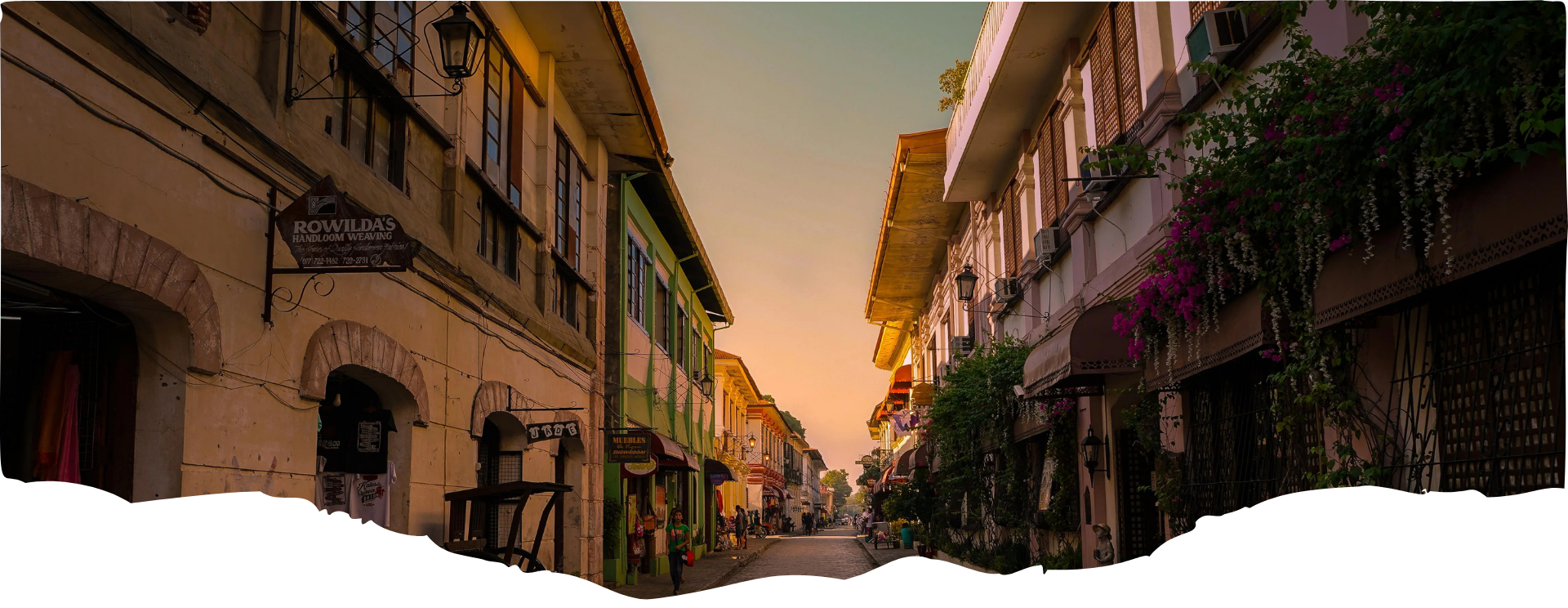
Long before the Spanish arrived, it was already a bustling trade hub where Chinese merchants bartered goods with indigenous Filipinos. But in 1572, Juan de Salcedo, a Spanish conquistador, saw its potential and established Villa Fernandina, turning it into the political and religious heart of Northern Luzon. Over the years, Vigan blossomed into a fascinating mix of Asian and European influences, its grand ancestral houses and cobblestone streets telling tales of its storied past.

Even as the world around it changed, Vigan held on to its identity. It officially became a city on December 27, 2000, under Republic Act No. 8988, but its significance had long been recognized. In 1999, UNESCO declared it a World Heritage Site, honoring it as the best-preserved Spanish colonial town in Asia. Every brick, every street, and every kalesa (horse-drawn carriage) rolling by is a reminder of its deep history. Walking through Calle Crisologo feels like stepping into a different era where tradition, resilience, and beauty continue to thrive.

Today, Vigan thrives as a perfect blend of past and present. Tourists ride horse-drawn kalesas through streets lined with heritage houses that glow golden under the soft evening lights. The scent of empanadas and bagnet fills the air, inviting visitors to taste its culinary wonders. More than just a destination, Vigan is an experience; a city that whispers stories of resilience, culture, and timeless beauty to all who walk its historic streets.


REFERENCE/S:

https://preview.redd.it/28xfdvtpcpo01.jpg?auto=webp&s=1557cc4859d7e95c65aaabf8b2ee308cc26dcb6e


Monday, January 6, 2025

OUT with the OLD, IN with the NEW

 The New Year always feels like a clean, newly made pad of paper, with no doodles, just a new page that takes on another journey 'til it worns out. It is a chance to reflect on the past, let go of what’s weighing us down, and focus on the changes we want to make. For me, it’s not just about making resolutions but genuinely committing to better habits that can shape a healthier, happier version of myself.

One of my main goals this year is to continue the weight loss journey I started mid-year. It hasn’t been easy, but cutting down on portions and staying active through recreational activities has already made a difference. This year, I’m ready to step it up. I want to take on more intense fitness challenges. After all, It’s not just about losing weight, it’s about feeling stronger and proving to myself that I can achieve what I set my mind to


Beyond physical fitness, I also want to focus on self-betterment. Creativity is something I’ve always valued but often neglect in the hustle and bustle of daily life. This year, I want to carve out time for the things that make me happy, whether it’s writing, drawing, or exploring new hobbies. As of now, my creativity is starting to brew as I am determined to make stuff out of dump to make into something useful.

Another big hurdle for me is procrastination. It’s something I’ve struggled with for years, and I know it’s holding me back. This year, I’m determined to tackle it head-on, no more putting off tasks until the last minute or making excuses. Small steps like better time management and setting realistic goals can make a huge difference.


I’m excited (and a little nervous) about the challenges ahead, but I know it’ll be worth it. Here’s to making the most of this fresh start and embracing all the possibilities that come with it!\


REFERENCES:

https://soperth.com.au/wp-content/uploads/2022/12/Perth-New-Years-Eve-Fireworks-2023.jpg

How I made my Christmas Vacation, CHRISTMASSY


The holidays are always a much-needed breather, and this year’s Christmas vacation was no exception. With 12 days to spend, I struck a balance between rest and meaningful moments.


First on my list? Rest days. After months of school and extracurricular activities, I finally allowed myself to stay in bed. Long naps, cozy blankets, and not having to rush anywhere, and it was pure bliss. Sometimes, doing absolutely nothing feels like the most productive thing you can do for yourself.


But the vacation wasn’t all about hibernating. As my
long-term friend Nimeesha came back to the province for Christmas, catching up with her along with Shatine was one of the highlights of my break. these moments reminded me of how precious friendships are, even when distance and time keep us apart.


Another meaningful part of my vacation was attending the traditional Misa de Gallo with my family. It’s a beautiful Filipino tradition where people wake up before dawn or take the evening masses for nine consecutive days of Mass leading up to Christmas. Being there with my family made my vacation worthwhile. Aside from that, we also went to church together on Christmas Day, which felt like the perfect way to celebrate the season.


REFERENCE:
https://encrypted-tbn0.gstatic.com/images?q=tbn:ANd9GcR0YyevXtkvXTQI59R7tzY14FkaukPiPkSAlA&s


Saturday, December 7, 2024

2ND QUARTER REFLECTION

This quarter in ICT has been exciting and fun because I learned so much about HTML and how websites are made. At first, I didn’t know much about coding, but now I feel like I can create simple web pages on my own as well as sharing my experiences and learnings to others.

We started by learning how to make an HTML file. It was interesting to find out that you just need a text editor like Notepad and save the file with a .html extension. Next, we learned about the basic parts of HTML, like angle brackets (<>) and tags. I discovered that some tags, like <br> and <hr> that don’t need an end tag called container tags, but others, like <p> and </p>, need both a start and an end tag to work. 

We also learned about heading tags (<h1> to <h6>), which allow us to create text of different sizes depending on the level of importance. These tags help organize a webpage and make it easier to read. HTML attributes were also introduced, such as the target attribute for hyperlinks and style-related attributes that let us customize fonts, colors, and other properties.


Adding images to a webpage was another valuable lesson. We learned how to manipulate the size and alignment of images using attributes like width, height, and alignment. This gave us more control over the appearance of the page and made it more visually appealing. In line with adding images, we also explored how to use background colors and images to add creativity and personality to a web page. Hyperlinks allowed us to connect different pages, and tables helped organize data in a clear and structured way.

Finally, we discussed frames, which are used to divide a webpage into sections that can display different HTML files. They were very tricky to understand how they split into rows and columns but through thorough examination of the given tasks given to us, I managed to understand how it really worked.

Overall, this quarter helped me understand the foundations of HTML and develop skills that I can use to create simple web pages.


REFERENCE/S:
https://www.udacity.com/blog/wp-content/uploads/2020/06/HTML_Blog-scaled.jpeg
https://www.ionos.co.uk/digitalguide/fileadmin/DigitalGuide/Teaser/html-tagst.jpg


Law Defaces Dangerous Spaces ( THEMATIC FOR 2ND QUARTER )

 What would you do if the very people meant to protect you were the ones causing you harm?

For countless women and children around the world, this question is not just a frightening thought but a horrific reality. Violence against women and children (VAWC) is a silent worldwide issue, often hidden behind closed doors, yet its scars are visible in lives shattered and futures stolen. This problem strikes at the core of families, where abuse often goes unspoken, leaving victims to suffer alone. Focusing on the Philippines, where numerous factors such as cultural stigma is one of the main reasons.

Across the globe, 1 in 3 women experiences physical or sexual violence, and countless children endure unspeakable abuse, often at the hands of those they know. In the Philippines, the stories are hauntingly real. Christine Silawan, a 16-year-old girl in Cebu, was found brutally murdered in 2019. A case that shocked the nation and exposed the vulnerabilities of young women. Then there’s Baby River, whose separation from her detained mother, Reina Mae Nasino, stirred public outrage and highlighted systemic failures in protecting the most innocent. These cases are painful reminders that behind every statistic is a human being; a woman or child who deserved love and safety but instead faced violence and neglect.

The fight against VAWC has led to significant steps forward. Laws like Republic Act No. 9262 (Anti-Violence Against Women and Their Children Act) and Republic Act No. 7610 (Special Protection for Children) provide legal safeguards for victims, while the Safe Spaces Act combats sexual harassment in daily life. Organizations such as the Philippine Commission on Women (PCW) and the Child Protection Network tirelessly advocate for victims, offering not just legal aid but hope and healing. 

Yet, despite these efforts, the question remains: Are we doing enough?


Ending VAWC is not just a matter of policies or punishments; it’s about changing mindsets. It starts with educating communities to break the cycle of violence, empowering women to stand on their own, and teaching children that they deserve respect and care. By choosing kindness over cruelty, justice over silence, and action over apathy, we can create a world where no one has to live in fear of those they love.


REFERENCE/S:
https://i0.wp.com/blog.witness.org/wp-content/uploads/2013/12/Screen-Shot-2013-12-10-at-11.04.16-AM.png?ssl=1
https://global-uploads.webflow.com/5e8c3be21629140f73c5d54e/632ad04bfd6c2860daedae7c_16Days-Action-banner.png


Wednesday, November 27, 2024

Bannuar iti Ilocos Sur, Bannuar iti Pilipinas!

Born on November 16, 1890, in Caoayan, Ilocos Sur, Elpidio Quirino was a man whose leadership defined a crucial time in Philippine history. Quirino was the sixth President of the Philippines who served from 1948 to 1953, assuming the presidency of a country still reeling from the aftermath of World War II. His presidency was a crucial time when the nation required strong guidance to rebuild its economy, infrastructure, and institutions.

His elevation into the presidency was founded in public service. Mariano and Gregoria Quirino instilled values and importance of education in the heart of their son who had these values up until retirement. Before becoming the head of state, he served in the Senate and also sat at the helm of government institutions that he headed as Secretary of Finance. His government placed significance on social welfare. These include housing, education, and health for Filipinos.


Though he had his share of difficulties in office, Quirino's leadership will be forever remembered in the Philippines. He was a committed man for national progress and the service of the people that earned him a place in the hearts of Filipinos as a respected figure in the annals of Philippine history. His presidency may have been brief, but the leadership during the period of rehabilitation has become a legacy for posterity, reminding everyone about leadership, integrity, and national unity in building a future.


REFERENCES:

https://upload.wikimedia.org/wikipedia/commons/thumb/8/83/Elpidio_Quirino_NHI_historical_marker_%28Vigan%29.jpg/220px-Elpidio_Quirino_NHI_historical_marker_%28Vigan%29.jpg

https://live.staticflickr.com/8666/16251053353_d24888ba4a_b.jpg


ISNHS DAY 2025

📸 The Grand Foot Parade To kick off the 2025 Foundation Day of Ilocos Sur National High School, all students proudly participated in a foot...